Healthcare App Development Company for Connected, AI-Enabled Care Applications
Quokka Labs delivers healthcare app development services, building HIPAA-ready web and mobile applications that connect clinical workflows, EHR data, and legacy systems, with AI built in where it improves care delivery and operations.
Trusted by Organizations Buildingthe Future of Healthcare
Quokka Labs helps healthcare organizations translate complex technology priorities into connected applications, modernized systems, intelligent workflows, and digital products designed to deliver measurable value across clinical and organizational environments.
0+
Years of Engineering Experience
0+
Applications Delivered
0+
Engineering & AI Experts
0%
Faster Time-to-Market
Healthcare Software Development Services
End-to-End Healthcare Engineering Services Across Clinical, Operational, and Patient Workflows
Quokka Labs delivers custom healthcare app development and software engineering across clinical, operational, and patient workflows, with HL7/FHIR integration, security controls, and AI capabilities built in where each product needs them.
Clinical Care & Provider App Development
Engineer provider- and patient-facing platforms for hospitals, clinics, physician groups, and care teams, including healthcare appointment booking, referrals, care coordination, and provider collaboration across locations and specialties.
Telemedicine App Development
Build virtual care platforms that connect patients and providers through video consultations, appointment management, e-prescribing, follow-ups, secure communication, and integrated payment experiences across distributed care environments.
Remote Patient Monitoring App Development
Develop monitoring platforms that connect patients, clinicians, and connected devices to collect physiological and patient-reported data, track chronic conditions, trigger configurable alerts, and support proactive care beyond traditional clinical settings.
Healthcare Legacy App Modernization
Transform aging healthcare applications through application refactoring, API enablement, cloud migration, database modernization, and modular engineering while preserving established workflows and creating pathways for new digital capabilities.
Wearable Healthcare App Development
Engineer wearable and companion applications that access activity, physiological, and other health data through device APIs, Apple HealthKit, Health Connect on Android, Bluetooth Low Energy, and cloud services, connecting patient-generated data with broader healthcare experiences.
Behavioral Health App Development
Create behavioral health platforms supporting therapy, counseling, assessments, care plans, appointments, secure communication, and longitudinal engagement, with consent controls for sensitive records and greater care team visibility across evolving patient needs.
EHR & EMR Integration Services
Integrate applications with clinical systems using HL7 v2 messaging, FHIR APIs, SMART on FHIR app authorization, REST APIs, and structured data mapping to support reliable information exchange across healthcare environments.
Pharmacy App Development
Build pharmacy and medication management platforms that support e-prescription processing, refills, inventory, order fulfillment, dose reminders, adherence tracking, patient communication, and payment workflows while connecting pharmacy processes with relevant healthcare systems.
Diagnostics, Biotech & Laboratory App Development
Engineer platforms for laboratories and diagnostics providers spanning sample management, testing workflows, results reporting, pathology, and LIS integration, connecting test data with clinicians and patient-facing apps.
Insurance & Claims Management Platform Development
Build platforms that connect eligibility, claims, billing, prior authorization, provider management, payments, and member services using rules engines, X12 EDI transactions such as 270/271, 837, and 835, APIs, intelligent document processing, and analytics.
Choose the Right Engineering Model That Fits Your Healthcare Initiative
Whether you're building a defined healthcare app or solving evolving challenges across interconnected clinical systems, Quokka Labs offers two engagement models shaped by how much of your scope is already known.
Dedicated Engineering
Forward Deployed Engineering
Best suited for
New app builds, MVPs, platform modernization, and integrations with a defined scope
Multi-system integration, enterprise AI adoption, and initiatives where requirements emerge during delivery
Engineering involvement
Dedicated engineering team responsible for architecture, development, integration, and delivery
Engineers embedded with your technology, product, clinical, and operational functions
Decision environment
Defined requirements and established technical direction
Ongoing discovery across technical, clinical, product, and business constraints
Ownership transitionDelivery model
Structured engineering against agreed milestones and outcomes
Continuous engineering shaped by evolving business, clinical, and technical requirements
Delivery ModelOwnership transition
Delivered solution transferred to internal technology and product stakeholders
Capability and system ownership developed alongside your internal teams
Connected Healthcare Experiences Across Every Stakeholder
As a healthcare app development company, Quokka Labs engineers connected mobile and web experiences for patients, care teams, and healthcare administrators, bringing workflows, information, communication, and decision support into a unified environment.
Give intuitive digital access to care, health information, communication, and services while r patients educing friction across appointments, consultations, medications, payments, and ongoing health management.
Patient Profile, Health Records & Family Access
Centralize registration, profiles, medical history, prescriptions, lab results, reports, care plans, and health records in a secure experience, with proxy access that lets caregivers and family members manage care on a patient's behalf.
Appointment & Provider Discovery
Enable provider search, appointment booking, availability management, rescheduling, cancellations, and reminders across healthcare services and locations.
Telemedicine & Virtual Care
Support video consultations, secure messaging, e-prescriptions, follow-ups, and remote interactions across connected patient and provider journeys.
Medication Management
Manage prescriptions, medication schedules, reminders, refills, adherence tracking, and pharmacy interactions through connected digital workflows.
Health Tracking & Monitoring
Capture health indicators, activity, vitals, and patient-generated data from mobile applications, wearables, and connected devices.
Billing, Payments & Insurance
Let patients view bills, store insurance details, check coverage and cost estimates before appointments, and pay through PCI DSS-compliant payment gateways, reducing billing confusion and front-desk workload.
Equip clinicians with digital tools that bring patient information, documentation, scheduling, prescribing and orders, and care team communication into one connected workspace.
Patient Management
Access patient profiles, clinical histories, appointments, treatment plans, documentation, and relevant health information from a centralized workspace.
Clinical Scheduling
Manage appointments, provider availability, care schedules, referrals, follow-ups, and resource allocation across clinical teams and facilities.
Clinical Documentation
Support digital documentation, structured notes, medical records, templates, transcription workflows, and AI-assisted clinical summarization.
Care Team Collaboration
Enable secure communication and information sharing between physicians, nurses, specialists, caregivers, and other authorized healthcare professionals.
Clinical Alerts & Notifications
Surface relevant patient events, appointment changes, monitoring thresholds, follow-ups, and other time-sensitive information through configurable notifications.
e-Prescribing & Orders
Send prescriptions electronically to pharmacies, place lab and imaging orders, and track results in one workflow, with DEA EPCS requirements addressed when controlled substances are in scope.
Give healthcare administrators centralized oversight of users, integrations, billing, reporting, communication, and security controls across interconnected healthcare environments.
User & Access Management
Manage patient, provider, administrator, caregiver, and organizational accounts with role-based permissions and controlled access to healthcare information.
Integration & Data Exchange Monitoring
Monitor EHR, lab, pharmacy, and payer connections from one dashboard, with message logs, error alerts, and retry controls that keep data flowing when an interface fails.
Analytics & Reporting
Turn clinical, financial, operational, and patient data into dashboards and reports that support organizational oversight and informed decision-making.
Billing & Payments
Support billing, payment processing, claims-related workflows, invoices, transactions, and financial interactions across healthcare services.
Communication Management
Coordinate notifications, patient communications, provider messaging, reminders, educational content, and other information flows through centralized controls.
Security & Compliance Controls
Configure role-based access, review audit trails, manage authentication policies, and enforce data protection rules across healthcare applications and information.
Healthcare Engineering in Practice
Engineering Healthcare Products Around Real-World Workflows
From revenue cycle platforms to connected oral health and preventive care apps, these projects show how Quokka Labs engineers healthcare products that integrate with real clinical, financial, and patient workflows.
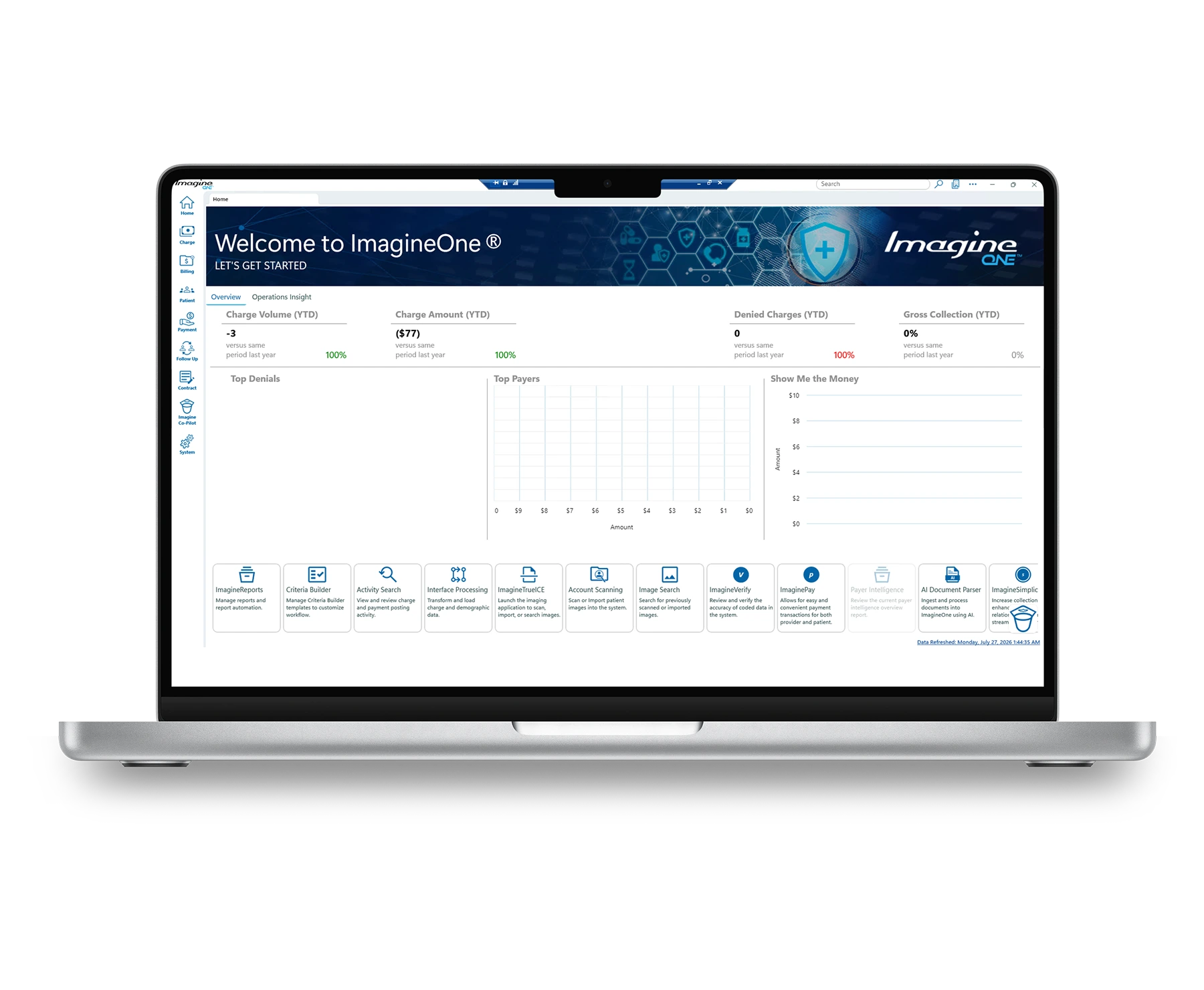
ImagineOne
Quokka Labs streamlined complex revenue cycle workflows across claims, payer interactions, eligibility, payments, reporting, and patient financial processes through a centralized healthcare management platform.
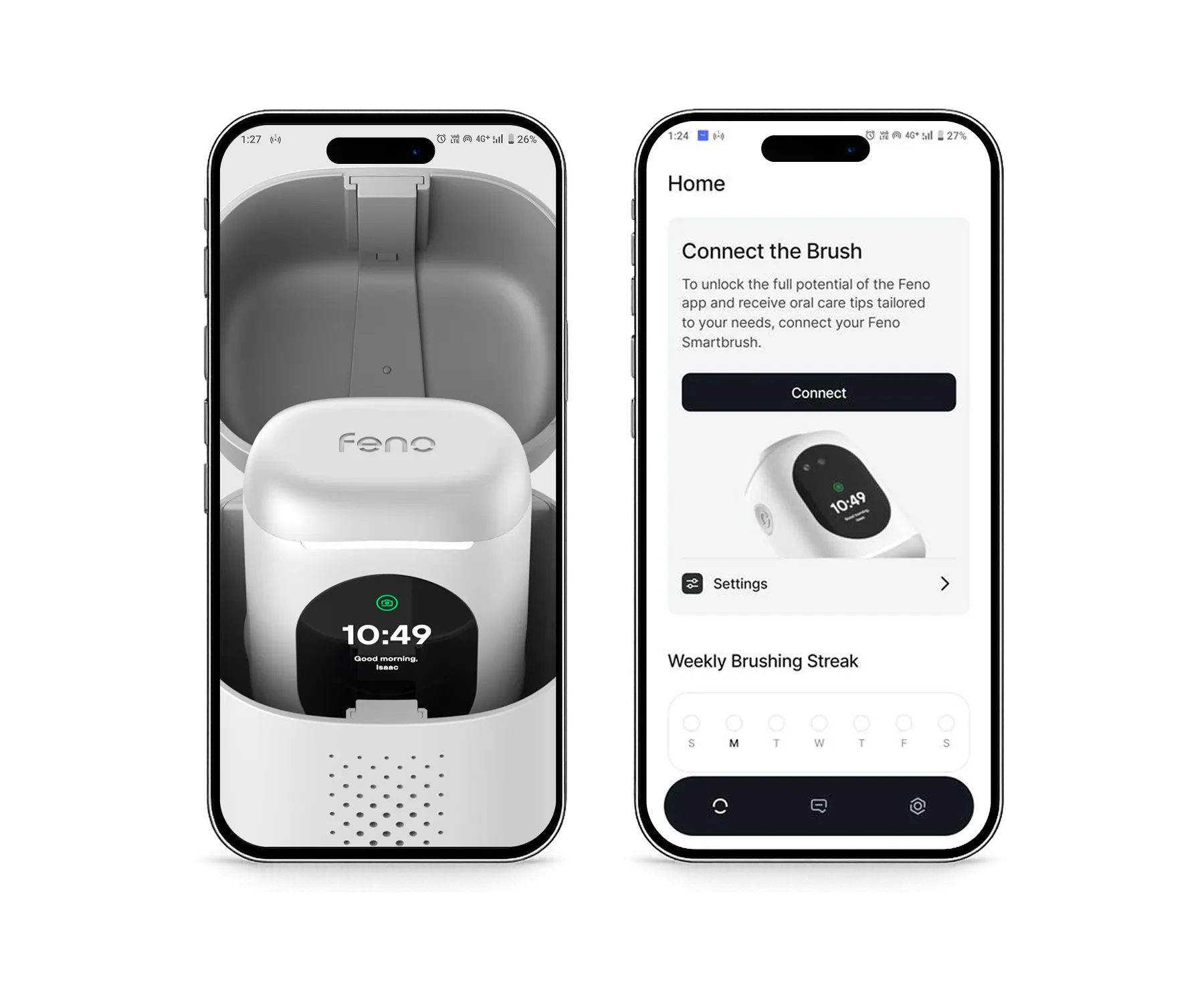
Quokka Labs engineered a companion app that connects smartbrush scans with oral health insights, enabling real-time assessments, historical tracking, personalized guidance, and proactive device alerts.
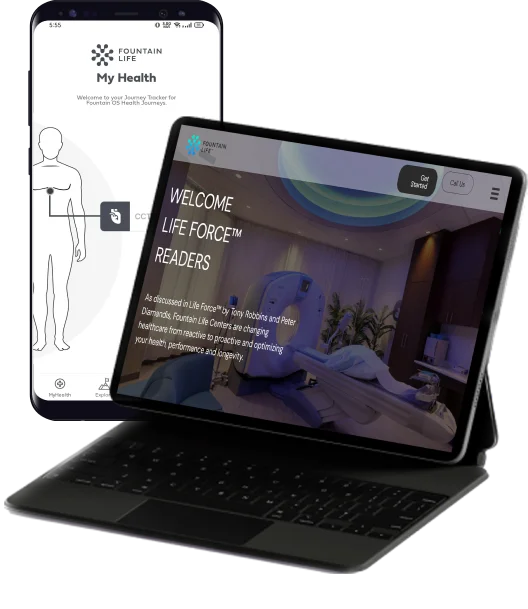
Quokka Labs engineered a platform that brings diagnostic results, personalized health plans, continuous health monitoring, and AI-assisted health insights together to support proactive, personalized care decisions.
Extend Healthcare Applications With AI and Connected Capabilities
Through AI healthcare app development services, Quokka Labs adds machine learning, generative AI, connected devices, and computer vision to healthcare applications, with clinicians kept in the loop wherever outputs influence care.
AI-Powered Clinical Documentation
Reduce Documentation Time for Clinicians
Apply AI-native engineering into clinical applications for draft note generation, patient summaries, structured documentation, and coding suggestions reviewed by clinicians before they enter the record.
AI-Driven Patient Risk Prediction
Identify Risk Before It Escalates
Apply machine learning to patient and clinical data to identify risk patterns, predict potential complications, and surface relevant insights within defined care workflows.
AI-Powered Medical Document Intelligence
Turn Unstructured Documents Into Structured Data
Use AI and document intelligence to extract, classify, summarize, and structure information from medical records, referrals, reports, forms, and other document-heavy workflows.
RAG-Powered Healthcare Knowledge Access
Retrieve Verified Answers From Approved Sources
Connect applications to approved clinical, organizational, and policy knowledge using RAG development to provide contextual information retrieval and grounded answers with source references within defined healthcare workflows.
AI-Enabled Healthcare Workflow Automation
Automate Multi-Step Healthcare Processes
Apply AI-driven workflow automation to coordinate repetitive and multi-stage tasks across documentation, scheduling, prior authorization, claims, referrals, and administrative processes, with human approval at defined checkpoints.
IoMT-Powered Real-Time Monitoring
Bring Continuous Health Visibility Into Care
Connect medical devices, wearables, and sensors to healthcare applications through BLE, MQTT, and device cloud APIs to capture real-time health information, monitor thresholds, surface alerts, and support remote care workflows.
Use AR and VR to create interactive environments for clinical education, procedure simulation, rehabilitation exercises, patient education, and healthcare workforce development.
Computer Vision for Medical Imaging
Support Diagnosis With Imaging Intelligence
Apply computer vision to radiology, pathology, dental imaging, and other visual healthcare data for image classification, anomaly detection, and diagnostic support, with the regulatory pathway defined by each application's intended use.
Predictive Healthcare Analytics
Plan Capacity and Resources Ahead of Demand
Combine operational, financial, and population health data with predictive models to forecast patient volumes, staffing needs, readmission trends, and revenue cycle performance.
Voice-Enabled Healthcare Workflows
Keep Clinicians Hands-Free During Care
Enable voice dictation, search, navigation, and hands-free commands across appropriate clinical and healthcare application environments.
Personalized Digital Care
Adapt Healthcare Experiences to Individual Needs
Use patient context, health history, preferences, and behavioral information with AI app development to personalize recommendations, reminders, education, and digital engagement within clinician-defined care plans.
Blockchain-Enabled Health Data Exchange
Strengthen Traceability Across Sensitive Transactions
Apply Blockchain technology where it fits, such as consent records, provider credentialing, and drug supply chain traceability, keeping PHI off-chain and anchoring only tamper-evident hashes for verifiable, auditable healthcare workflows.
Build HIPAA-Ready Healthcare Applications With Security and Compliance at the Core
Quokka Labs embeds security, privacy, access controls, and auditability into healthcare engineering, aligning each application with the regulations, interoperability standards, and AI governance frameworks that apply to its data and intended use.
HIPAA
HITECH
HITRUST CSF
FTC Health Breach Notification Rule
CCPA/CPRA
GDPR
DPDP Act
HIPAA
HITECH
HITRUST CSF
FTC Health Breach Notification Rule
CCPA/CPRA
GDPR
DPDP Act
WCAG 2.1 AA
Section 504
ADA
Section 508
21st Century Cures Act
WCAG 2.1 AA
Section 504
ADA
Section 508
21st Century Cures Act
HL7 v2
FHIR
SMART on FHIR
DICOM
USCDI
TEFCA
X12 EDI
NCPDP SCRIPT
HIE Connectivity
HL7 v2
FHIR
SMART on FHIR
DICOM
USCDI
TEFCA
X12 EDI
NCPDP SCRIPT
HIE Connectivity
ICD-10
CPT
HCPCS
SNOMED CT
LOINC
RxNorm
NDC
CDT
ICD-10
CPT
HCPCS
SNOMED CT
LOINC
RxNorm
NDC
CDT
NIST AI RMF
ISO/IEC 42001
EU AI Act
Human-in-the-Loop
Explainability
AI Audit Trails
Model Monitoring
NIST AI RMF
ISO/IEC 42001
EU AI Act
Human-in-the-Loop
Explainability
AI Audit Trails
Model Monitoring
SSO
MFA
RBAC
ABAC
Zero Trust
Encryption
Consent Management
Audit Logging
DevSecOps
HIPAA-Eligible Cloud Services
AWS
Azure
Google Cloud
SSO
MFA
RBAC
ABAC
Zero Trust
Encryption
Consent Management
Audit Logging
DevSecOps
HIPAA-Eligible Cloud Services
AWS
Azure
Google Cloud
Identify Where AI Can Create Operational Impact First
Map the workflows, application gaps, data readiness issues, and modernization opportunities where AI can improve execution, reduce manual effort, and support enterprise-scale adoption.
Why Healthcare Leaders Choose Quokka Labs for HealthTech Engineering Services
Quokka Labs is a medical app development company that combines healthcare domain experience with AI, product, data, and software engineering to build HIPAA-ready technology around complex workflows, connected systems, and evolving organizational needs.
Connected Patient Journeys
We connect digital touchpoints across discovery, access, treatment, follow-up, and ongoing care, helping organizations create more consistent patient experiences throughout the healthcare journey.
Clinical Productivity
Our teams bring intelligent documentation, contextual information access, workflow automation, and digital tools into established clinical processes, helping care teams spend more time on clinical priorities.
Interoperability at Scale
With standards-based integrations across HL7, FHIR, X12 EDI, and APIs, we connect EHRs, payer systems, laboratories, and patient apps so data moves reliably between them.
HIPAA-Ready Application Engineering
Our engineering approach incorporates encryption, identity controls, access management, secure data handling, and auditability across applications that process sensitive healthcare information.
Data-Driven Care Delivery
By connecting clinical, patient, device, laboratory, and operational information, we create data foundations that power analytics, AI models, and clinical dashboards.
Healthcare Technology ROI
Each initiative is scoped against defined success metrics, such as documentation time, claims turnaround, or patient engagement, so investment decisions account for technology cost, adoption, and long-term impact.
From first assessment to production, each healthcare engagement is built around the workflows your teams already run and the outcomes you need to measure.
How We Build Healthcare Apps From Strategy to Production
Quokka Labs follows an engineering-led process that settles regulatory, security, and integration requirements early, reducing late-stage rework as healthcare apps move from strategy to production.
1
Healthcare Product Strategy
Define the product's users, clinical and operational workflows, intended use, success metrics, and release scope before engineering begins, aligning product decisions with care delivery and business priorities.
2
Security & Compliance Planning
Establish privacy, regulatory, security, and data protection requirements early, covering access controls, encryption, auditability, consent, and whether the product's intended use brings it under FDA medical device oversight.
3
Healthcare Architecture & API Strategy
Design application and infrastructure architecture around availability, interoperability, data exchange, performance, and secure API connectivity across complex healthcare technology environments.
4
EHR/EMR & System Integration
Connect healthcare applications with EHR/EMR, payer, laboratory, and device systems through HL7 v2, FHIR, X12 EDI, and APIs, with data mapping and validation for reliable exchange.
5
Healthcare UX & Application Development
Develop role-specific healthcare applications for iOS, Android, and web that support clinical, administrative, and patient workflows, designed to WCAG 2.1 AA accessibility standards with the usability and performance real-world healthcare environments demand.
6
QA, Security & Workflow Validation
Validate functionality, integrations, security, performance, data accuracy, and workflow behavior through rigorous testing and user acceptance with clinical stakeholders to identify technical and workflow risks before production deployment.
7
Deployment & Continuous Optimization
Deploy healthcare applications across appropriate cloud or on-premises environments with monitoring and performance controls, including model monitoring for AI features, supporting continuous improvement as requirements, workflows, and organizational priorities evolve.
Insights on AI, Interoperability, and Healthcare Technology Transformation
Explore practical perspectives on healthcare AI, interoperability, application modernization, digital health, intelligent workflows, data engineering, and the technology decisions shaping connected healthcare systems.
How to Build a HIPAA-Compliant Healthcare App: A Step-by-Step Approach
Learn how to develop a HIPAA-compliant healthcare app with our step-by-step guide. Best practices to ensure end-to-end patient data protection for portals, telehealth, and health tracking apps.
AI in Healthcare Apps: Improving Diagnostics, Patient Care, and Efficiency
Discover how AI is revolutionizing healthcare app development—enhancing diagnostics, patient care, and operational efficiency across hospitals and telehealth platforms.
Guide To Healthcare App Development: Features, Costs & Future Trends
Discover the complete guide to healthcare app development. Explore costs, must-have features, compliance (HIPAA, GDPR), AI trends, and how to build scalable, secure medical apps.
How to Build a HIPAA-Compliant Healthcare App: A Step-by-Step Approach
Learn how to develop a HIPAA-compliant healthcare app with our step-by-step guide. Best practices to ensure end-to-end patient data protection for portals, telehealth, and health tracking apps.
AI in Healthcare Apps: Improving Diagnostics, Patient Care, and Efficiency
Discover how AI is revolutionizing healthcare app development—enhancing diagnostics, patient care, and operational efficiency across hospitals and telehealth platforms.
Guide To Healthcare App Development: Features, Costs & Future Trends
Discover the complete guide to healthcare app development. Explore costs, must-have features, compliance (HIPAA, GDPR), AI trends, and how to build scalable, secure medical apps.
Share your healthcare app idea or integration challenge to start mapping the workflows, compliance requirements, and technical path to production.
Healthcare Technology Assessment
Evaluate workflows, technology requirements, integration dependencies, security considerations, and opportunities for modernization across complex healthcare environments.
Healthcare Engineering Roadmap
Define the technical path across architecture, APIs, interoperability, application development, AI capabilities, deployment, and continuous technology improvement.
Specialized Healthcare Expertise
Access multidisciplinary expertise across healthcare product engineering, AI, data, interoperability, modernization, security, and connected digital experiences.
Tell Us About Your Healthcare App
Healthcare App Development Services FAQs
What should a healthcare app development company provide across end-to-end product design and delivery?
A healthcare app development company should cover product strategy, UX, iOS, Android, and web engineering, EHR and device integrations, security, testing, deployment, and ongoing improvement. In healthcare, that scope also includes HIPAA-ready architecture, audit logging, accessibility, and an early check on whether FDA medical device rules apply to the product's intended use.
How does custom healthcare app development address complex clinical workflows?
Custom healthcare app development starts with the intended clinical or operational workflow and translates it into applications, integrations, data flows, and role-specific experiences. For example, a referral workflow may need provider scheduling, FHIR-based EHR data exchange, secure messaging, and status tracking, each designed around how clinicians and staff already work.
What are the criteria for selecting a medical app development company with AI and ML expertise?
Look for a medical app development company with healthcare delivery experience, AI in production rather than only prototypes, interoperability depth, and mature security practices. Strong partners also design human-in-the-loop review, monitor model performance after launch, handle PHI safely in AI pipelines, and can explain when an AI feature may become regulated software.
What does app development for healthcare require beyond standard software engineering?
App development for healthcare must safeguard protected health information (PHI), support clinical workflows, and meet regulatory, access control, audit, and data accuracy requirements. It also relies on HL7 v2 and FHIR for data exchange, WCAG accessibility for patients and staff, and testing against real clinical scenarios, because errors can affect patient care, not just user experience.
Where does AI fit into modern healthcare application development?
AI healthcare app development services apply AI to clinical documentation, document intelligence, knowledge retrieval, risk prediction, and workflow automation. Effective implementations keep clinicians in the loop, ground outputs in approved sources, log AI actions for audit, and monitor models after launch, so AI supports clinical decisions rather than replacing them.
How should organizations approach Android and iOS medical app development?
Native iOS medical app development (Swift, HealthKit) and Android medical app development (Kotlin, Health Connect) suit apps that need deep device integration, background monitoring, or high performance. Cross-platform frameworks such as React Native or Flutter share one codebase across both platforms and work well for patient engagement, scheduling, and medication apps. The right healthcare tech stack choice depends on users, devices, integrations, and roadmap.
Which healthcare workflows are commonly addressed through specialized applications?
Specialized apps commonly support medication management, appointment scheduling, home healthcare, patient monitoring, billing, claims, diagnostics, and provider workflows. A medication management app, for example, combines e-prescription data, refill tracking, dose reminders, and adherence reporting. Many teams build medication reminder apps in React Native to ship Android and iOS from one codebase, with platform-specific notification handling for reliable dose alerts.
What role do EHR, EMR, and medical device integrations play?
EHR, EMR, laboratory, and medical device integrations connect healthcare apps with the systems clinicians already use, typically through HL7 v2 messages, FHIR APIs, and device SDKs or Bluetooth Low Energy. AI medical device app development services add analysis of device-generated data, such as flagging abnormal readings, but software intended to inform diagnosis or treatment may qualify as Software as a Medical Device (SaMD) and require an FDA regulatory pathway.
Who provides custom healthcare web app development for complex healthcare environments?
Healthcare app development companies with combined web, mobile, and integration capabilities build custom healthcare web apps such as patient portals, provider dashboards, and admin systems. As a healthcare mobile app development company serving the USA, Quokka Labs delivers healthcare app development solutions spanning product strategy, UX, web and mobile engineering, HL7/FHIR interoperability, HIPAA-ready security, data, and AI.
What is the cost to develop a medical mobile app?
The cost to develop a medical mobile app depends mainly on scope. A focused MVP with core patient features sits at the lower end. Adding EHR/EMR integration, multiple user roles, and iOS and Android delivery raises it, while AI features, medical device connectivity, and FDA regulatory work sit at the higher end. Security requirements and ongoing support also shape the budget, and a product assessment confirms the estimate for your scope.